Free guide
UK Volunteer Law Compliance Checklist 2025–2026
A free self-assessment checklist on UK volunteer law: the Equality Act 2010, the Worker Protection Act 2023, UK GDPR, safeguarding and DBS, employment status and expenses, and health and safety.
About this guide
A practical self-assessment for your organisation. Work through six areas of UK law that affect volunteers and tick each item you already have in place. Each item is marked Required, where there is a legal duty or strong legal obligation, or Recommended, for current good practice. A summary and action plan at the end help you record the gaps, who will close them and by when.
What’s inside
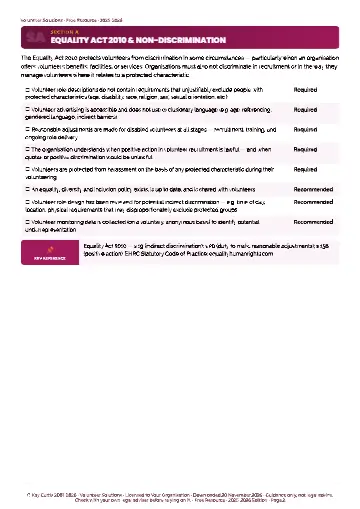
- Section A, the Equality Act 2010: role descriptions, advertising, reasonable adjustments, positive action and harassment
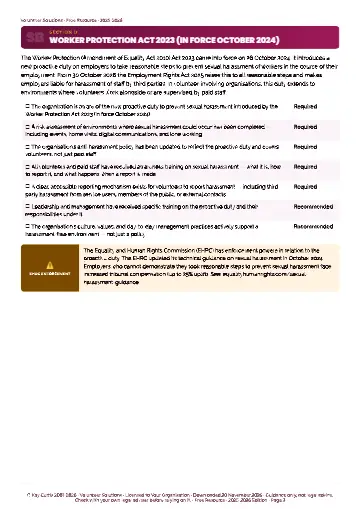
- Section B, the Worker Protection Act 2023: the duty to take reasonable steps to prevent sexual harassment, risk assessment, policy, training and reporting
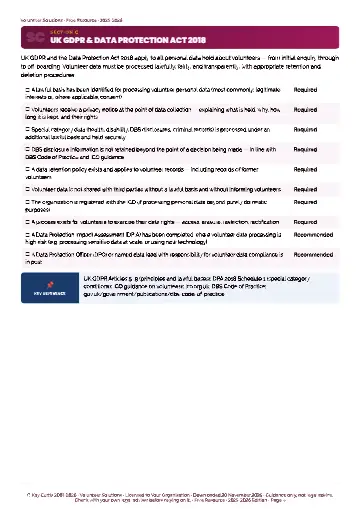
- Section C, UK GDPR and the Data Protection Act 2018: lawful basis, privacy notices, special category data, DBS information, retention and data rights
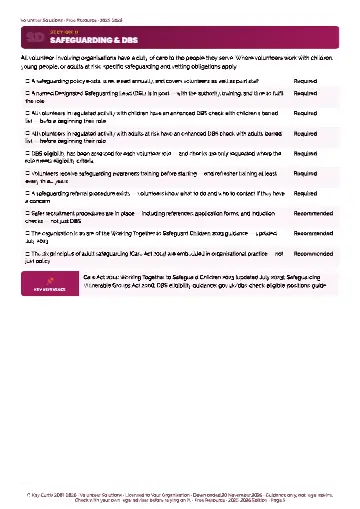
- Section D, safeguarding and DBS: your policy, a Designated Safeguarding Lead, DBS eligibility and checks, training and safer recruitment
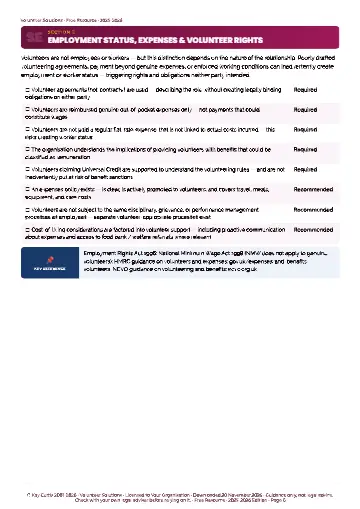
- Section E, employment status, expenses and volunteer rights: volunteer agreements, genuine expenses, flat-rate payments and Universal Credit
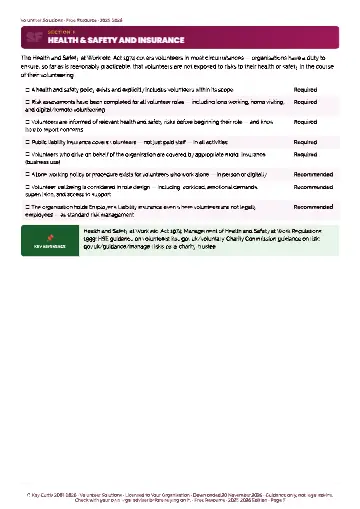
- Section F, health and safety and insurance: risk assessments, lone working, public liability and motor insurance
- Key legal references for each section
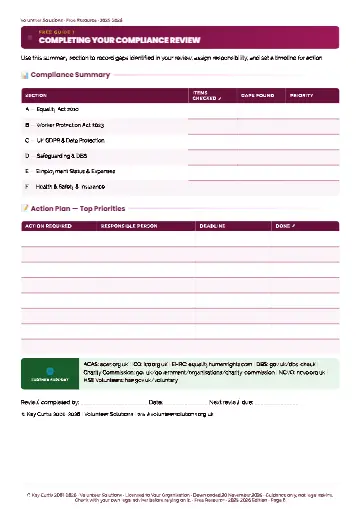
- A compliance summary, an action plan for your top priorities and a review sign-off
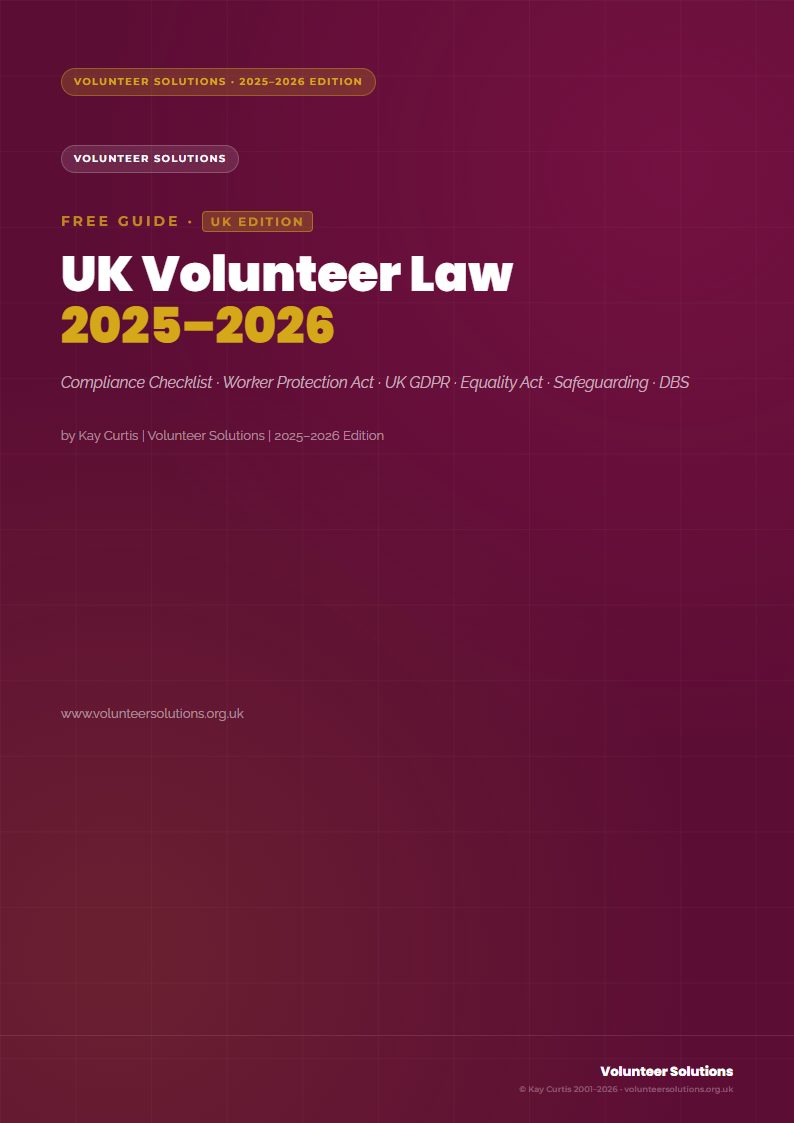
See every page
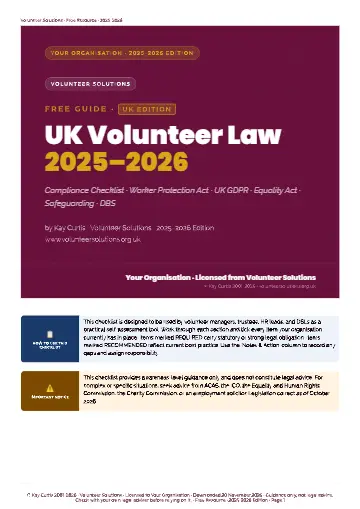
All 8 pages you download, shown here with “Your Organisation” where your name goes. Your copy carries your organisation’s name and logo.
Who it’s for
- Volunteer managers and coordinators
- Trustees
- HR leads
- Designated Safeguarding Leads
Use it as a yearly check, or when the law or your volunteer roles change.
Legal content is awareness-level guidance, not legal advice.
Questions
Is this legal advice?
No. The checklist gives awareness-level guidance. For complex or specific situations it points you to ACAS, the Information Commission, the Equality and Human Rights Commission, the Charity Commission or an employment solicitor.
What is the difference between Required and Recommended?
Required items carry a statutory duty or a strong legal obligation. Recommended items reflect current good practice.
Go further with a training module
Ready to train your team on this topic? These training modules cover it in depth, with a trainer guide, slides and handouts.
- Module 20: Volunteers And The Law
- Module 21: Policies and Procedures
- Module 24: Assessing & Dealing with Risk to Volunteers
- Module 9: Confidentiality
Read more on the blog
- Preventing Sexual Harassment in Volunteer Settings: The New Duty and Good Practice
- Volunteer Data Protection and UK GDPR: What Volunteer Managers Need to Know
- Volunteer Agreements vs Employment Contracts: The Legal Line You Must Never Cross
- Volunteer Agreement, Policy or Role Description: Which Document Does What
More free guides
Try the platform free for 14 days
Try the main tools with up to 2 people. If you decide it is not for you, that is fine.
Not ready yet? Get free resources first