Free guide
Neurodiversity Inclusion Quick Guide
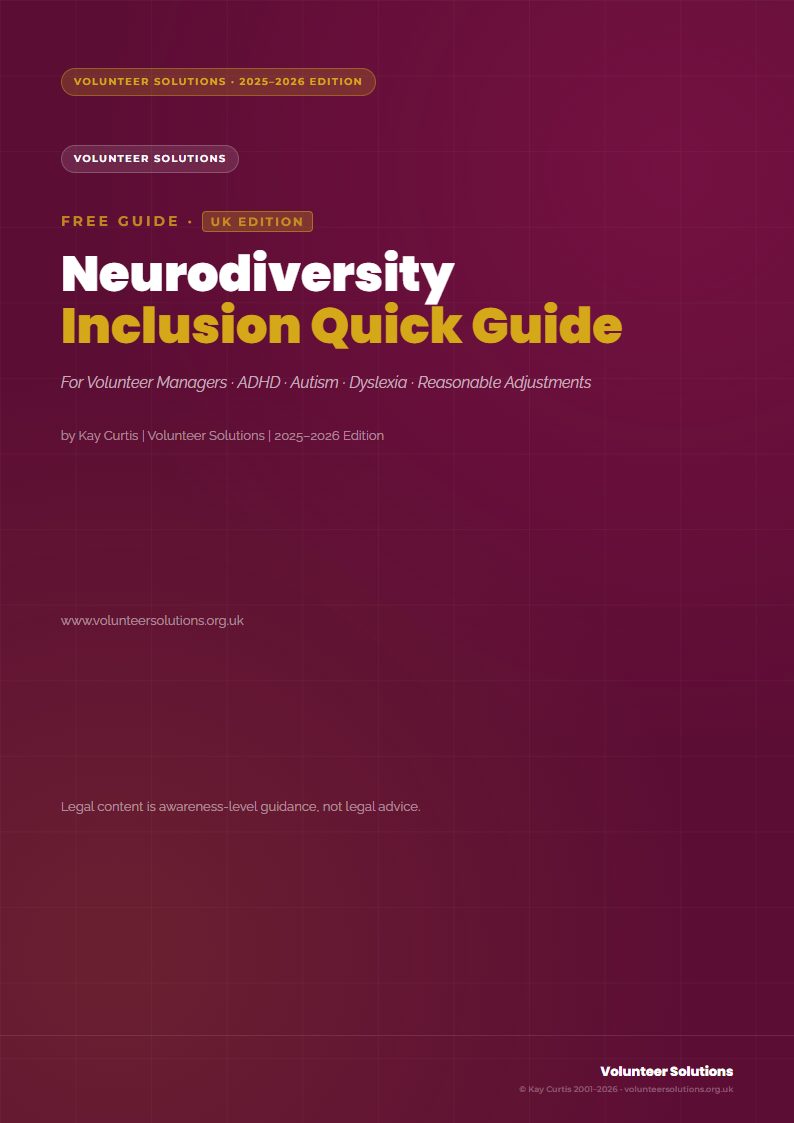
A free quick guide for volunteer managers on including neurodivergent volunteers: ADHD, autism, dyslexia, dyspraxia and dyscalculia, reasonable adjustments, and how to talk about support.
About this guide
A short, practical reference for volunteer managers supporting neurodivergent volunteers. It is a companion, not a diagnostic tool: use it to understand common neurodivergent profiles, spot adjustments that could help, and approach conversations about support with confidence and care.
What’s inside
- A quick summary of the Equality Act 2010 and the duty to make reasonable adjustments for volunteers
- Why you don’t need a formal diagnosis before making adjustments
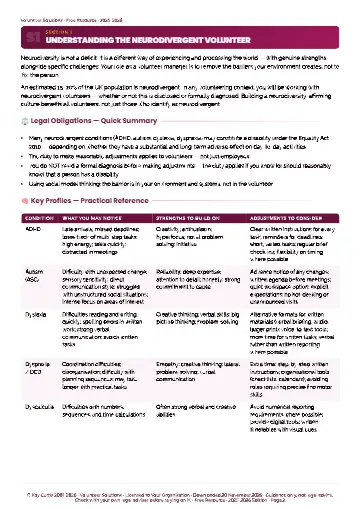
- A reference table for ADHD, autism, dyslexia, dyspraxia and dyscalculia: what you may notice, strengths to build on and adjustments to consider
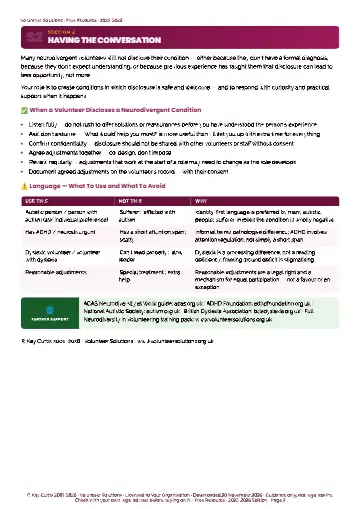
- What to do when a volunteer tells you they are neurodivergent
- Language to use and to avoid, and why
- Where to find further support
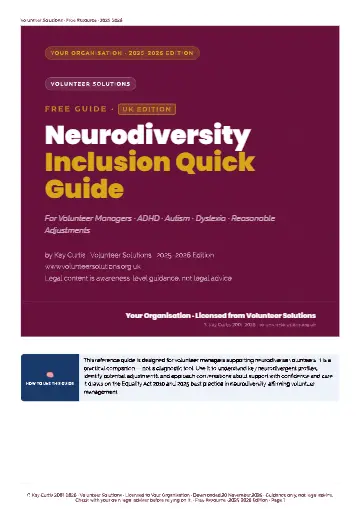
See every page
All 3 pages you download, shown here with “Your Organisation” where your name goes. Your copy carries your organisation’s name and logo.
Who it’s for
- Volunteer managers and coordinators
- Supervisors who support volunteers day to day
- Organisations reviewing how inclusive their volunteer roles are
Legal content is awareness-level guidance, not legal advice.
Questions
Do volunteers need a diagnosis before I make adjustments?
No. The guide explains that the duty to make reasonable adjustments applies if you know, or should reasonably know, that a person has a disability. A formal diagnosis is not needed first.
Go further with a training module
Ready to train your team on this topic? These training modules cover it in depth, with a trainer guide, slides and handouts.
- Module 23: Managing Volunteers with Extra Support Needs
- Toolkit 4: Towards Diversity and Inclusion
- Module 10: Diversity - How A Volunteer Can Help
Read more on the blog
More free guides
Try the platform free for 14 days
Try the main tools with up to 2 people. If you decide it is not for you, that is fine.
Not ready yet? Get free resources first