Training library · Training module
Module 11
Befriender Training Module for Volunteers
Befriender induction training module. Covers what befriending is and is not, clients and referrals, boundaries (including digital and financial), safeguarding, the Mental Capacity Act 2005, confidentiality and UK GDPR, and where befrienders can get support.
Also available: Being a Befriender: Self-Study Workbook for Volunteers
Overview
This training module prepares new befrienders for their role and is equally useful for refresher training. Participants look at what befriending is and is not, who the service supports and how referrals and funding work, the outcomes befriending aims for, and the skills and qualities they bring. The session covers the boundaries of the role (physical, emotional, digital and financial), safeguarding children and adults at risk, safer recruitment and DBS, the Mental Capacity Act 2005, confidentiality and UK GDPR, and what to do when something feels difficult. Case studies and 16 scenario cards keep it practical, and participants leave with a worry sheet and a personal contact checklist. If you cannot run a group session straight away, new befrienders can work through the self-study course (12 short sections, about 2.5 hours) on their own.
What participants will learn
By the end of the session participants will:
- have a clear understanding of what befriending is, and what it is not
- understand who the service supports, who funds it and how referrals work
- be aware of their safeguarding responsibilities for both children and adults at risk
- understand confidentiality: what it means, when it can be broken and how to handle information
- have a clear sense of the boundaries of their role: physical, emotional, digital and financial
- have basic awareness of the Mental Capacity Act 2005 and what it means in practice
- have an introduction to the Equality Act 2010 and inclusive befriending
- feel confident in the skills and qualities they bring to the role
- have a personal contact checklist and worry sheet to take away
- know how to get support and who to contact when something feels difficult
What’s included
- Trainer guide with session timetable, timed activities and trainer notes
- Facilitator slides (editable PowerPoint) with speaker notes
- 13 handouts (H1 to H13), including a worry sheet and a personal contact checklist
- Worksheet W1: About This Befriending Project
- 6 case study cards, agree or disagree statement cards and 16 situation scenario cards
- 10 extension activities
- Self-study course and self-study slides for individual learners
- Evaluation form
What’s inside
Every page of every part, zoomed out so you can see the scale and layout: 231 pages in all.
 Trainer guide100 pagesHow to run the session: preparation, timings, what to say, activities and trainer hints
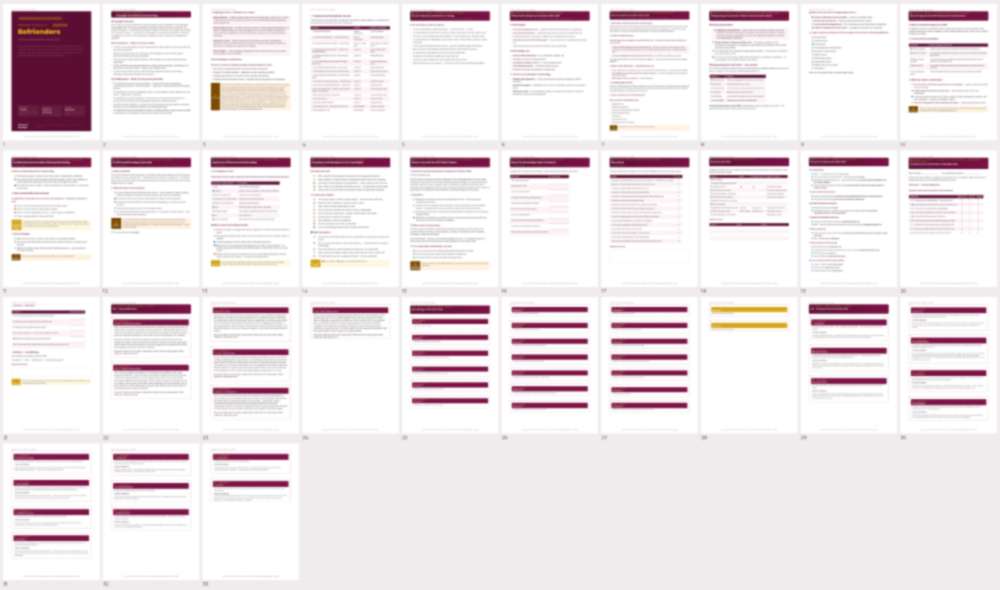 Handouts and worksheets33 pagesFacts, guides, worksheets, scenario cards and templates for participants
 Facilitator slides15 pagesEditable presentation that follows the trainer guide
 Self-study course24 pagesThe same learning for volunteers who can’t attend, with knowledge checks
 Self-study slides57 pagesThe self-study course as slides, on any screen
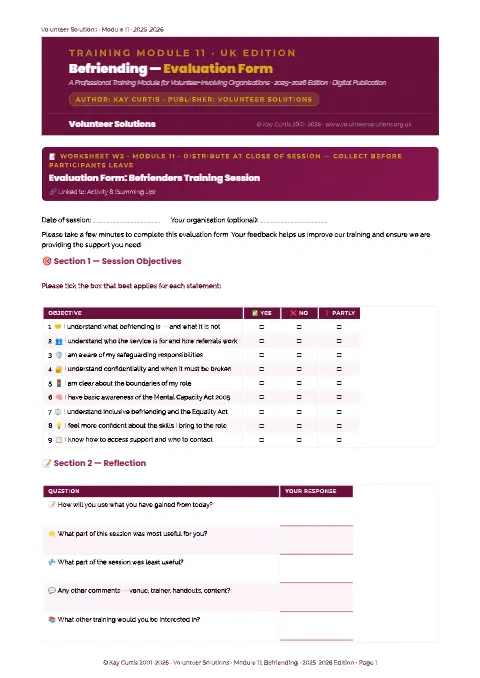 Evaluation form2 pagesParticipant feedback for your records and funders
Previews are shown at low resolution. The full files come with your plan or single purchase.
Deliver it yourselves, in-house
Everything your team needs to run this session without an external trainer: a scripted trainer guide, editable PowerPoint slides you can adapt with your own examples, the whole module in your logo and colours, and handouts ready to print. Kept up to date when the law or guidance changes, and it builds your team’s skills and confidence as they use it.
Why befriending volunteer training matters for UK charities tackling loneliness in 2026.
Module 11: Befriending is a trainer-led session of about three and a half hours for new befrienders and the coordinators who train them. It covers what befriending is and is not, role boundaries including digital ones, safeguarding, the Mental Capacity Act 2005, confidentiality, and getting support when things feel difficult.
Befriending is one of the most valuable and most demanding volunteer roles. People are referred for many reasons, including loneliness and isolation, long-term health conditions and changes in their lives, and the cost-of-living crisis has added to that need. Befrienders need clear boundaries and good support to keep the relationship safe and sustainable.
The module explains safer recruitment and when DBS checks apply, including when befriending counts as regulated activity, and gives awareness-level input on safeguarding children and adults at risk, the Mental Capacity Act 2005, UK GDPR, the Equality Act 2010 and the Worker Protection Act 2023.
For befrienders who cannot attend a session, pair it with Self Study Series 10: Being a Befriender.
Content last reviewed: April 2026. Written by Kay Curtis, 30+ years’ UK voluntary-sector experience.
Questions
Is this module suitable for telephone and digital befriending?
Yes. The core session covers digital boundaries, the trainer notes include guidance on telephone befriending, and Extension 10 covers digital befriending in more depth.
Does it cover supporting people with mental health needs?
At awareness level. The module recognises that many clients have mental health needs, covers the Mental Capacity Act 2005, and makes sure befrienders know when and how to pass on concerns and get support. Volunteers in specialist mental health befriending services will need further training.
How do you handle role boundaries with befriendees?
Boundaries are a core part of the session. Activity 5 uses agree or disagree statements to explore physical, emotional, digital and financial boundaries, and H9 gives befrienders a list of dos and don'ts to keep.
Does it cover DBS checks for befriending roles?
Yes. H3 is a plain guide to safer recruitment and DBS. It explains the levels of check, that a barred list check is only added where the role is regulated activity (usually the case when befriending children, and for adults only where the role includes certain activities), and how the DBS Update Service works.
Is it better to buy this module or a platform plan?
Befriending volunteers benefit from training across multiple areas — befriending, safeguarding, confidentiality, working safely. If you only need befriending training, the single module works. For comprehensive training, the platform (from £295 a year, with all 55 resources and the tools to run your volunteers) pays for itself after six modules.
Often used with
Try the platform free for 14 days
Try the main tools with up to 2 people. If you decide it is not for you, that is fine.
Not ready yet? Get free resources first